
United and active
The word for 2025 was visibility
The Global Network for Social Justice and Digital Resilience acted collectively to respond to the volatile global political and economic context, and shared its collaborations with the larger ecosystem to protect digital rights in our regions. The knowledge built, the forecasting reports, and the analysis of resilience capacities were the topics that brought together our members, social justice organizations, and communities in the Global Majority.

Collective work for digital resilience
Our workstreams
Forecasting & Fundraising
This year started off with big announcements and drastic funding cuts that affected the entire ecosystem of digital rights in the Global South. The network working group on forecasting and fundraising focused on making sense of those changes in the ecosystem, and aimed to share thinking and approaches by organizing two public webinars and sharing forecasting reports and shorter reflection pieces. We met together in a strategy retreat in June and worked on a position paper, which will be shared in early 2026.
Tech Lab
The collaborative work at the Tech Lab came to fruition with multiple projects starting to see the light, the work of SocialTic and their Documentation repository on consensual digital forensics for the defense of Human Rights, the research and support from Smex within their region like Click, Load, Kill: A Look into the Cyberweapon Industry in the WANA Region, the work of Fundacion Acceso in the creation of Psychosocial Support guides with their Psychosocial Support Guide for Spyware Attacks, and many other publications, guides and work from the member organizations. In 2026, members will work on the upcoming projects, aiming at the development of collaborative efforts at technology assessment, threat analysis and response, and shared infrastructure.

Social Justice Values
After several discussions and strategic reflections around the intersection of social justice and digital resilience, 2025 was the year in which we decided to tackle the question of what embedding social justice principles in the workstreams of the Network look like. The need to bring a specialist from the field to support the network in this area led to the creation of the Social Justice Values Committee, a working group that developed the terms of reference for a consultancy, supervised the hiring process of the consultant, and worked side by side with her throughout the year, to ensure a more participative work covering the assessment of social justice values across the member organizations with an emphasis in anti-ableism, identifying areas of growth that they can explore together; share resources, learnings and tools, and create the basis of a narrative that will allow the DRN to produce meaningful reflections about inclusion and the challenges faced by digital resilience organizations when implementing strategies that are impactful and beneficial for those that have historically experienced barriers to inclusion.

Misinformation
2025 focused on creating, developing, and collectively agreeing on the research details for the project that the group will begin in 2026, titled “Digital Resilience and Information Disorders in the Global South: Ground-Level Perspectives from Social Justice Movements.” Throughout the year, the group worked in parallel to define the research structure and agree on a common framework and shared research principles. Members also collaborated closely on all aspects of the project, including drafting the project outline and developing the budget. In addition, the group organized two community calls to connect, share, and learn from other organizations working in the field. In 2026, members are ready to begin working on their case studies. The group will also organize an in-person launch event and document the process for internal learning within the DRN.

Communications working group
A diverse group of communication professionals, based in different countries from the Global South, developed a collective diagnosis of the key needs, challenges and priorities that civil society organizations of the region face. The 2026 working plan will be based on that outcome to stand on peer learning, training and joint actions that enhance their mission to disseminate reliable information, engage with journalists and the media to strengthen the human rights agenda, protect activists and reach the digital resilience audience.
Bringing the Network to the ecosystem
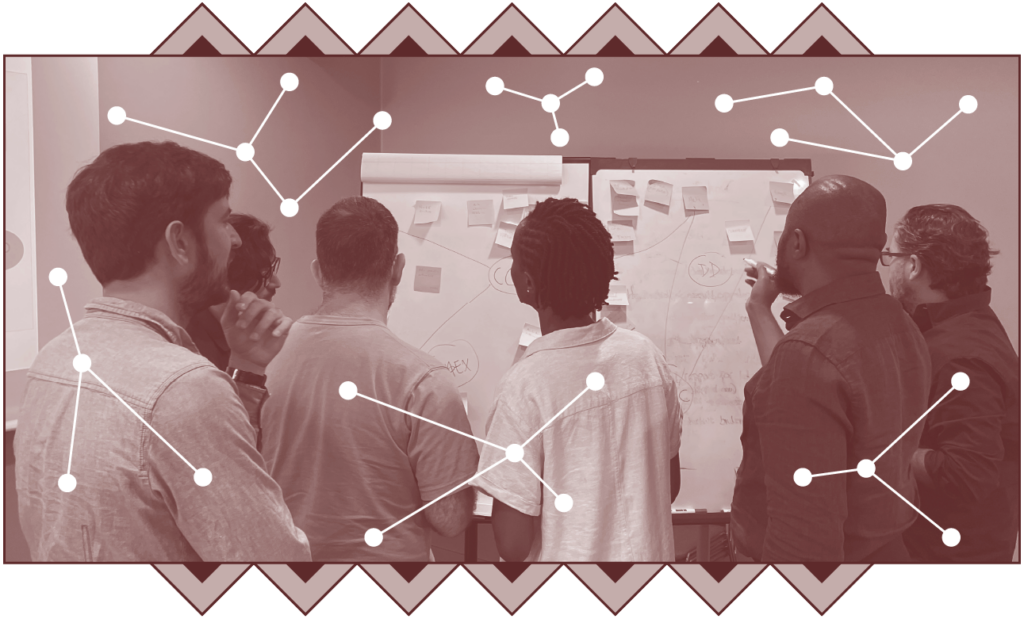
The Global Network for Social Justice and Digital Resilience is an open space where diverse, and often excluded voices, can gather to dialogue, share and co-create strategies and actions. During 2025, the Network published research and held public events to address the context of limited resources and evolving challenges.
Research
Scanning the Horizon, The Future of Digital Rights & Resilience in the Global Majority
The research -written in 2024 and released in 2025- explores future political, economic and technological trends, challenges and opportunities in the digital rights and digital resilience ecosystems in the Global Majority. Read more

Research
Pulse 2025, The Trump Effect on Digital Resilience in the Global Majority
This brief explores the most recent changes in the ecosystem and analyzes the evolution of the geopolitical, technological, and activism trends presented previously in the Scanning the Horizon report, from a Global Majority perspective. The Network report zooms in on these topics to highlight the main challenges the digital resilience ecosystem will need to address over the next decade, as well as to identify possible interventions and opportunities for action. The analysis shows that most trends reviewed in the Scanning the Horizon report are accelerating. Read more.
Event
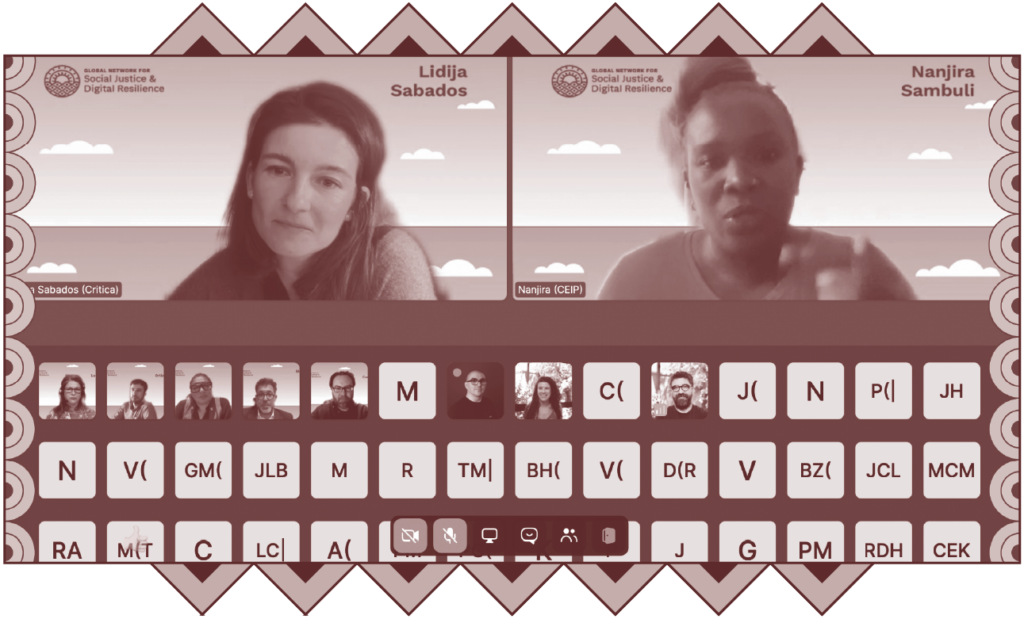
Webinar: Scanning the Horizon
The Network organized an open conversation with discussants and participants from the Global South. As the webinar focused on the technological trends and their impact in the region, a diverse panel of speakers shared the local challenges and responses from their countries. Read the main conclusions of the event and watch some highlights of the webinar here.
Event
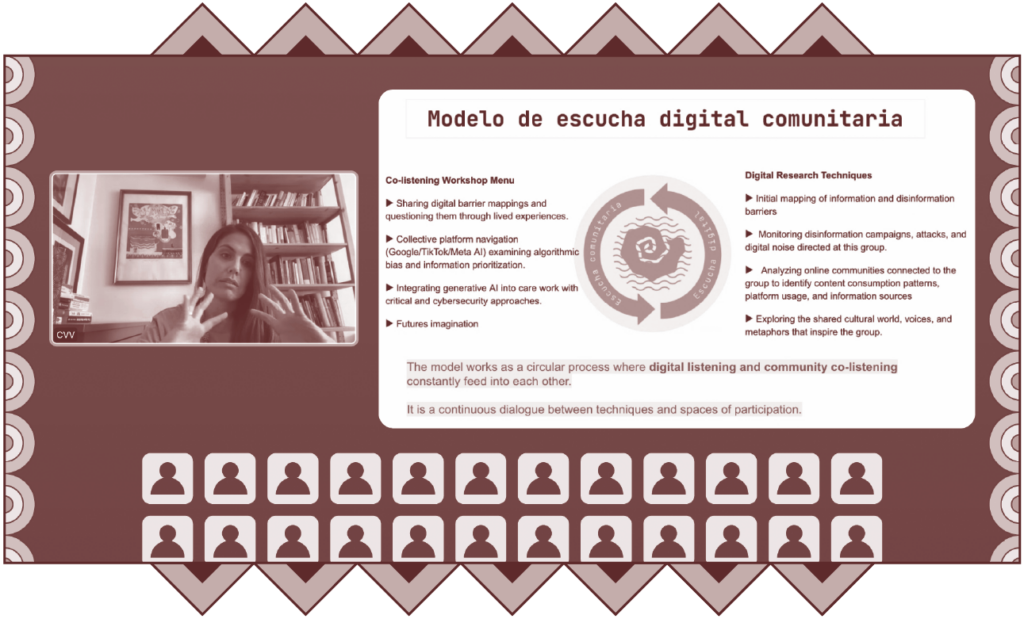
Community call: Social listening methodologies to counter information disorders
The Information Disorders working group of the Global Network for Social Justice and Digital Resilience is currently conducting a research project to document and systematize how grassroots organizations, communities, and activists from the region develop and implement concrete responses to information disorder challenges using a digital resilience approach. With an aim to learn from other groups and coalitions across the Global South, the group organized a community call, Methodologies for digital listening to fight misinformation, that gathered activists and members of civil society organizations from different parts of the Global South to have a collective conversation with Las Escuchadoras, a network of Latin American women, professionals from a wide variety of fields, dedicated to researching and applying innovative social listening techniques across media and digital ecosystems with a feminist and community perspective. Read the main learnings and reflections from the conversation here.
Publications
Social justice values in the ecosystem
There are many ways of adopting values-based perspectives, and all of them can light the way for decision-making. Member organizations reflect about how they implement social justice values in their projects and initiatives in order to build a more inclusive digital ecosystem, and they share with the wide ecosystem how they address internal practices and challenges. Read more
Publications
Reflections from the Global South
Members of the Network explore and socialize strategies to deal with emerging challenges with a resilient approach. Each organization addresses a topic and shares practical content from its own perspective and experience. Read the first article: Reflections from Costa Rica: The path to autonomy and collective strength for civil society
2026: The road ahead
In the past year, there have been many changes in the digital resilience and digital rights ecosystem. During 2026, the Global Network for Social Justice and Digital Resilience will develop an updated three-year strategy (2026-2028) for the Network, with key contributions to address challenges in the ecosystem.
In the year of the Network’s 5th anniversary, the members stand on the trust built and the collective work done to create new opportunities for digital rights advocacy in the Global South.